Thursday, May 1, 2014

Love of the Game, and the Other Players

Today's blog post was written by Michael McFadden, a sophomore sociology and psychology major.  Michael is a student in the Social Foundations of Coaching, a course taught by Play Like a Champion founder and director Professor Clark Power and Kristin Sheehan.

Although I was born and raised in Indiana, specifically South Bend, I grew up only spending a few gym classes a year on a basketball court. I became very interested in hockey before the age of six, and this interest developed into a twelve year hockey career. Growing up, I spent virtually no time playing basketball, the stereotypical, Hoosier sport of choice, because of the conflict between basketball and hockey season. It wasn’t until last year, my freshman year in college, that I spent significant amounts of time playing and loving the sport of basketball.

Unfortunately, hockey is not a sport that most people can easily play. There are many socioeconomic barriers to entry and this makes it a fairly exclusive sport; equipment and ice time are both expensive and difficult to come by in most parts of the United States. Hockey will forever have a place in my heart, but my recent interest in it has dwindled. Of course, Hockey itself has not become worse or lesser in my eyes. The feelings of a crisp, across-ice pass, a hard wrist-shot, and a defender-evading deke are ones that are irreplaceable. No newly-developed fascination with another sport could reduce the love I have for my years as a hard-hitting forward on my four-time city championship-winning and four-time state championship-losing high school hockey team. The memories and friends made along the way will forever be cherished. In spite of my love for hockey, basketball has truly become my recent passion.
I turned the TV on the other day with the hope that I’d be able to watch some sports. Sure enough, I had the choice between the NHL Playoffs and the NBA Playoffs. Without thinking, I immediately switched to the NBA Playoffs. My involuntary decision left me awestruck. It was just two years ago that I would have considered basketball to be an uninteresting and jejune sport that was infinitely inferior to hockey. Today, however, my immediate choice of sport is basketball. With the sound of Kevin Durant’s monstrous dunks and miraculous three-pointers in the background, I began thinking about the TV channel decision that I had just made.

Delving into my recent, involuntary decision yielded some interesting revelations about my social experience at Notre Dame as well as my past social experience in hockey. When I began meeting most of my current friends, we spent most of our time playing basketball together. Basketball served as an easy way to socially integrate; naturally, it wasn’t feasible to use hockey as a means to interact and get to know each other. Basketball, which meant anything from shooting around to full, five on five games back behind Keenan, started as fun, indirect ways to get to know fellow dorm members. Shortly, it became more than just an introductory rendezvous. Basketball transitioned into my friend group’s way of escaping reality, if only for a short amount of time. It became a way to enjoy our time with one another and to grow closer. Naturally, not only did I grow to love my friends, I grew to love basketball.
I finally realized that my recent love for basketball was not only a response to the sport of basketball itself, which I find to be extraordinarily brilliant, but also to the experiences that my new friends and I have shared and continue to share together. I developed a deep-rooted love for hockey after years of shared experiences with my hockey buddies. It wasn’t merely the sport that captivated me, it was also the relationships that grew over time. While I’ve learned a lot in two years of college, my new perspective on sports and their social roles in people’s lives is indispensable insight that I will never forget. Hopefully, I’ll avoid judging the worth or excitement of a sport based on the apparent amount of “fun” it provides. The value of a sport is not found in its rules and general gameplay, it is found in its instrumental social importance.

Monday, April 28, 2014

The Problem with Sports: Us

Today's blog was written by Morgan Smith.  Morgan is a student in the Social Foundations of Coaching course taught by Play Like a Champion Today founder and directors Professor Clark Power and Kristin Sheehan.  Morgan is a senior marekting major at the University of Notre Dame.

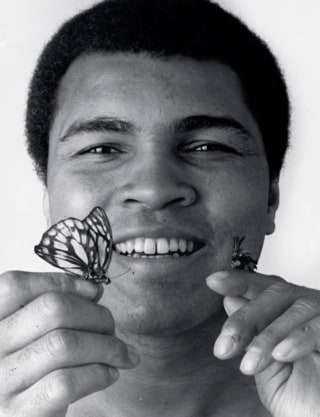
Muhammad Ali. The most notable boxer to ever enter a ring. He is a household name, renowned for his battles outside the ring as much as those fought inside it. So how do you know the most famous boxer in the world? Not the way you should.

photo courtesy of biography.com
Many remember Muhammad Ali as Cassius Clay (his given name), the Olympic gold medalist and heavyweight champion. His unique style of boxing jarred traditionalists. His speed allowed him to simply lean away from his opponent’s punches, rather than duck from them. He did not protect his face, opting instead to keep his hands at his hips. His brazen technique won him three heavyweight titles—the first man in history to do so—and finish 56-5 in his professional career, 37 of wins coming from knockouts.

You may recall his controversial persona. Ali earned a reputation for his cocky attitude, often writing poems detailing his own greatness or belittling his opponents. This, of course, pales in comparison to his shocking public announcement of his conversion to Islam in 1964, the day after winning his first heavyweight title. Cassius Clay joined the Nation of Islam, officially changing his name to Muhammad Ali and refusing to respond to any other name thereafter. Refusal became a pattern for Ali during the Vietnam War draft. Citing his religious beliefs, Ali refused to enter the draft. He was eventually tried and found guilty of draft evasion, after which he was stripped of his heavyweight title and banned from boxing for the next three and a half years. Luckily for Ali, the Supreme Court overturned his guilty ruling on June 28, 1971, acquitting him of draft evasion. Muhammad Ali went on to clinch two more heavyweight titles.

photo courtesy of NBC News
 We know of Ali’s physical struggles long after his boxing career ended. In 1984, “The Greatest,” as he was often called, received a devastating diagnosis: Parkinson’s Disease.  A progressive and degenerative disorder, Parkinson’s causes vital brain and nerve cells to malfunction and die, leaving the affected individual incapable of controlling his or her movements.

I’ll ask the question again: how do you know Ali? Probably not as a humanitarian, right? Yet, that is exactly what he is. Muhammad Ali stands as one of the most charitable athletes in history. He has provided 232 million (yes, you read that correctly) meals to starving persons throughout the world. He has spent months in countries like Indonesia, Mexico, and Morocco, hand-delivering food and medicine to children. In the United States, he has continued his mission of charity by visiting hundreds of soup kitchens and hospitals, participating in Make-A-Wish Foundation and the Special Olympics. He even founded the Muhammad Ali Parkinson Center. Ali has received numerous awards and recognition for his philanthropic efforts, including the Presidential Medal of Freedom and Amnesty International’s Lifetime Achievement Award.

So, why don’t we know Muhammad Ali for his beautiful and charitable spirit? Why do we know him for his controversial involvement and athletic feats? I don’t have an answer for that question; and that is the problem.

Charles Barkley once said the now infamous line: “I am not a role model.” Well, that didn’t go over well. Our society looks to the men and women of sports as role models for ourselves and for our children. We want to be like Mike. We watch in absolute awe of LeBron’s 61-point game or Peyton’s seven touchdowns. But when they slip up, all hell breaks loose. Dwayne Wade’s “lovechild” scandal graced several tabloid covers. Richard Sherman’s infamous interview flooded SportsCenter for weeks. So, where’s the rest of it? Where are the news stories detailing Sherman’s work with underprivileged youth? They’re nowhere. We ask these athletes to be our role models, yet we never acknowledge them for it. We sweep the good stuff under the rug and run a highlighter over the indiscretions.

Muhammad Ali’s legacy leads us to a very stark realization: Maybe the athletes aren’t the problem. Maybe it’s us.


Friday, April 25, 2014

Boston Takes It Back


Today's blog post was written by Tim Brazelton.  Tim is a senior accounting and economics major at the University of Notre Dame and a student in the Social Foundations of Coaching, a course taught by Play Like a Champion Today Founder and Director Professor Clark Power and Kristin Sheehan.

Monday was a great day for Boston.  The Red Sox may have lost, the Celtics were far from even reaching the NBA playoffs, but there was still reason to celebrate.  It was Patriots Day, the day of the Boston Marathon.  In this especially important 118th running of the Boston, there was a wealth of inspiring stories to add to the celebration.

For starters: the race itself.  American Meb Keflezighi emerged as an unlikely winner, beating out a crowd of talented Kenyan runners and finishing the course in 2:08:37, a personal best for Meb.  Meb’s win was so surprising for multiple reasons.  Not only was he facing a very difficult field that included Dennis Kimetto, the course record holder, but he also won the race at age 39, making him at least 10 years older than most of the field’s elite runners.  He separated himself from Wilson Chebet and eventually finished with an 11-second lead.  It is rare for an American to win a major world marathon, let alone one who is nearly 40, so Meb’s victory alone made for a special day in Boston.  However, the remarkable results continued in the female race, as Rita Jeptoo finished in 2:18:57 to grab the women’s course record.  Both races featured amazing runs that helped to create an electric atmosphere for this running of the Boston Marathon.


The Marathon’s 118th running also marked the end of the heartwarming story of Team Hoyt: the father son duo of Dick and Rick Hoyt.  Rick, who has cerebral palsy, is pushed by his father Dick in a wheelchair every single race, and they have been a staple of the Boston Marathon for years.  Team Hoyt has run over 1,000 races together, including more than 200 triathlons, 6 ironman triathlons, and 50 marathons.  The 2014 Boston Marathon marked their last marathon.  Team Hoyt’s story is possibly the most inspiring story in all of sports, and shows the human potential for endurance, perseverance, and compassion.


However, the biggest story of the 118th Boston Marathon was the elephant in the room: Boston’s yearlong recovery from the bombings that occurred at last year’s marathon.  The bombings were perhaps the largest disaster to happen at any sporting event, and demoralized the entire city of Boston as the entire finish area became a crime scene.   Truly, the city of Boston was hit at its core that day, and faced the immense hardship of picking up the pieces and recovering from a blow to one of the greatest traditions in sports.  Despite this adversity, Boston clearly took its marathon back on Monday.  It took the painful memories of last year’s race and defiantly reclaimed their tradition, throwing away the hardship in a celebration of what makes the Boston Marathon great.

What can we learn from this year’s Boston Marathon?  Quite possibly the greatest lesson is the ability to soldier on after times of great hardship.  Monday’s marathon showed that is not the hardships that define us, but the way that we react to them and overcome them.  Whether it’s Meb’s amazing run in the face of overwhelming odds, Team Hoyt’s perseverance in the face of cerebral palsy, or Boston’s amazing ability to come back in the face of one of the greatest disasters in the history of sports, the Boston Marathon continues to show the world what strength really means.

Friday, April 11, 2014

Derek Jeter's Farewell Season

Today's blog post was written by James Hodgens, a student in the Social Foundations of Coaching course taught by Play Like a Champion founder and directors Professor Clark Power and Kristin Sheehan.  James is a senior marketing major at the University of Notre Dame, and despite his allegiance to the Yankees, the editor of this blog will allow this homage to Derek Jeter. 

For some sports fans March is about college basketball; for baseball enthusiasts such as myself, it’s all about getting prepared for Opening Day.  Every year as the weather gets warmer; it means baseball season is getting closer.  However, this season will be different from every other season I have watched.  This year will be my last opportunity to watch my favorite player – Derek Jeter. 
I was born the same year Jeter was drafted (1992), and was three years old when he made his Major League debut (in 1995).  My earliest sports memories were of the great Yankees teams of the late 1990’s, and Jeter is the last remaining Yankee from those great teams.  Needless to say, I have never known the Yankees without Jeter.  To me, he is more than just a great player on my favorite team; he is a role model in a time where sports, especially baseball, have experienced a digression in the character of athletes.
Derek Jeter
New York Yankees
Jeter has had, without a doubt, one of the most accomplished careers in baseball: he is a thirteen time All-Star, five time World Series champion, and a member of the 3000 hit club.  However, what make him special are the demonstrations of his character and the values that he preaches.  It was not just natural athleticism that enabled Jeter to achieve so much; he possesses an incredible drive.  He once said: “If you’re going to play at all, you’re out to win.  Baseball, board games, playing Jeopardy, I hate to lose.”  When he struggled during the 2010 and 2011 seasons, critics began to question whether or not he was too old to continue to excel.  He responded by rebounding during the 2011 season and having one of his best years in 2012.  Now, after missing almost the entire 2013 season, he is attempting to come back from injury for one last season.

Jeter has maintained his sterling reputation during baseball’s most corrupt years – the steroid era – and in what is considered to be the most difficult city to play in – New York.  Being the star player for the Yankees earns you a lot of support, but also a lot of negative attention from media and opposing fans.  Jeter takes it all in stride, using it all as further motivation.  In addition, his charity, the Turn 2 Foundation, has raised money to help children adopt healthy lifestyles away from drugs and alcohol.  For these reasons, Jeter is respected by teammates and opposing players from around the league.

Baseball will miss Derek Jeter when he retires.  Given his history of avoiding the spotlight, there is a good chance that he will live a quiet life after baseball.  Hopefully he is healthy enough to finish his career with one last great season.  For all that Jeter has done for the game of baseball, he deserves it.

Monday, April 7, 2014

Motivation Is Key

Today's blog post is by Brett Sessetti, a senior marketing major at the University of Notre Dame and a student in the Social Foundations of Coaching course taught by Play Like a Champion directors Professor Clark Power and Kristin Sheehan.

On January 17, 2014, a high school basketball player named Spencer Wilson hit an incredible, game-winning shot to defeat his team’s archrival. The game that pitted Wilson'sVillains against Mount Airy ended in dramatic fashion, with a Mount Airy player at the free throw line with 2.2 seconds left. They were leading as well, 82-81, and so it seemed nearly impossible that the Villains could pull out the victory. With the free throw rolling off the rim, however, Spencer Wilson had the chance to get a shot off after a clutch rebound and assist by his teammate. He heaved a 50-foot shot that bounced off the backboard and into the net, ending the game at 84-82 and sending the crowd into a frenzy.
 
Check out the incredible final 2.2 seconds here:
 
Before the game, Coach Thompson of the Villains told every player to pick someone to whom they would dedicate their performance. The hero in the game, Spencer Wilson, chose someone very important to him, Josh Rominger. Wilson and Rominger were two great friends that both had been diagnosed with cancer. Wilson beat his cancer but, unfortunately, Rominger did not. He passed away nine months prior to the game, but Wilson kept his spirit alive with an unbelievable shot.

Coach Thompson decided to give his team this sense of motivation because the Villains were going up against their archrivals. He hit home with some of the players, one of whom chose his parents as his dedication. Spencer Wilson also chose someone with whom he had a special connection. After the game, Spencer signed Josh Rominger’s name on the game ball to commemorate the special moment.

This story stands out as a great example of a coach connecting with his players and giving them the opportunity to fight for something. By relating sports to athletes’ lives off the court, this particular coach found a great way to motivate his players. Thanks to a great coach, a dedicated friend, and an incredible moment in sports, we all can enjoy this story of a tribute to a lost friend.

Thursday, April 3, 2014

A Visit to the NCAA

Today's blog as written by Sam Gans, a senior Political Science major at the University of Notre Dame.  Sam is a student in the Social Foundations of Coaching course taught by Play Like a Champion Today director Professor Clark Power and Kristin Sheehan.  This month, Sam participated in a spring break seminar sponsored by the University of Notre Dame Career Center called Sports Industry Career Trek, on which he visited NCAA headquarters, among other tropical locales. 

I spent a day of my spring break this year taking a tour of the NCAA in Indianapolis (basically the exact same thing as being on a tropical beach) as part of a career trek through the Notre Dame Career Center.
When you first walk into the NCAA’s facility, there is a quote on the wall from the late Myles Brand, former president of the organization that describes the NCAA’s goal as one of service first and foremost to the student-athlete. It doesn’t mention money, publicity or even anything resembling a strong athletic product. The quote is about service, an indicator that the goal of the organization should be to make sure the student-athletes gain skills for life in education and within the community.

Often, we forget what’s really important when talking about sports. I watch March Madness on television and see the huge buzz the college football bowls generate and don’t remember that the athletes I see plastered on the television are normal people. I entered the NCAA tour with a slightly negative view of the NCAA as the institution that wanted to prevent fun and inconsistently laid down harsh punishments for schools. That was until meeting with the people who work there made me realize just how much they care about putting the student-athletes into the best possible situations possible, both now and in the future.
My sophomore-year roommate was a member of the Notre Dame football team. I saw every day how much of a toll getting up before 6 a.m. to practice took on him and how difficult it was to manage his academic and athletic responsibilities. He had to work extremely hard to succeed at both. And although athletics were important to him, so was setting himself up well for life after football. He wasn’t a robot produced to perform athletically for the university. He was a human being trying to find his place in the world, with goals and ambitions that didn’t involve playing sports for the future.

It’s important coaches of youth – high school and younger – remember this. If this type of attitude of academics, learning and growth is what’s most important at the college level, where some athletes do have a chance at the professional ranks and which generates hundreds of millions of dollars per year, it should without a doubt be the goal of those below collegiate athletics, as well. The athletes aren’t employees of their schools whose worth is determined by how good they are at throwing a football or dunking a basketball.

High school coaches should act the same way toward their players, focusing on growth and improvement – in the classroom, on the field and in life – rather than just winning and losing.

Monday, March 31, 2014

A Hockey Battle: Overtime


Earlier this month, the high school hockey championship game for the state of Ohio was played in Columbus. After 7 overtimes, the game was declared a tie by the officials, and both teams were named co-state-champions. That much is agreed upon. In the aftermath of the game, some supported the decision to protect the health of the young athletes, while others, including many athletes, argued that the game should have been allowed to be played out until one clear winner was declared. the discussion continued here at the Play Like a Champion Today headquarters at the University of Notre Dame. In the following blog, Play Like a Champion intern Tony Kim takes the view that the game should have been played out, while Lynn Kachmarik, Director of National Growth for Play Like a Champion writes in support of the Ohio hockey officials.
 Let’s Be Real: Winning, Hockey, and a State Championship.

Let’s face it: the desire to win is within all of us. No one likes to lose and no one likes to tie. We all like to win, be on top, and be the champion. And yes, it is true that everyone who plays their heart out for every minute of every game whenever they put on the uniform that representing their team is a winner. But, those who battle to the absolute end to win over all are the champions. And most of the time in the end, there is one and only one champion. That was unfortunately not the case, though, with two hockey teams from Ohio.

On March 8th, two Ohio high school hockey teams squared off in the state championship game. One was the unranked underdog Northview High School from Sylvania . The other, number 1 ranked St. Ignatius from Cleveland.  It was a classic David versus Goliath story.  After regulation and seven overtime periods, the game was called in a 1-1 tie for the state championship.

I know what you’re thinking, “Why would they call it a tie after seven overtimes?!” Or, “Why would they not just have gone to penalties after the first two overtimes?” And maybe even, “That’s a shame. I know I wouldn’t want to share my championship with another team.” In my opinion, the last of these possibly presumptuous statements of thought resonates the most with most competitive athletes. Those who train to win and be number one are inherently selfish. So why end a game after eight overtimes? Why not just let the play go on until a winner is declared? Especially after seven grueling overtime periods, don’t you think the players themselves would want to seek the game’s eventual end? By not allowing them to do so after all of that time almost seems cruel.  In addition, it took away the chance for the Northview underdogs to upset number one St. Ignatius and the chance for St. Ignatius to be declared an undisputed champion.

Even the players and coaches for each team spoke as if they were ready and amped-up to play and fight out another overtime period.  Such readiness was described by team Captain, Harry Smith, of the Northview team:
“We were energized for that eighth overtime.  We kept going back in the locker room and we kept telling each other, ‘The next time we come back in here, we’re going to be holding the state championship trophy.' We were tired, but we were ready and didn’t want the game to end that way.” 

As both teams skated onto the ice, ready to play another grueling and passionate overtime period to determine the Ohio State High School Hockey Champion—neither of them expected to have the game called a tie before they even met for a face-off. So why call it without even playing just one more period?

 Well, the reasoning behind it may be one of safety.   
“What happens if we go into the eighth overtime and a kid is exhausted and he doesn’t keep his head up and gets run over and is taken out on a stretcher?” Northview Coach Mike Jones said. “If a kid doesn’t skate off that ice because he’s hurt, what kind of national debate is there going to be                then?”

 Of course, the safety of the players is the most important thing to keep in mind—especially with a sport as hard-hitting, exhausting, and outright dangerous as hockey.  Without notice, a player could’ve gotten checked into the glass so hard during one of those overtimes that he may not have gotten up after.

But that’s hockey.  Those who have played hockey or know the game what-so-ever know that hockey is not a nice sport. You don’t play hockey without knowing that you’re playing one of the most dangerous games on this earth involving sticks, a puck that moves a hundred-plus miles per hour, and blades on your feet to move on a cold, hard, and unforgiving surface. There are hits; there are fights; there are enforcers wreaking havoc; there are teeth lost and dentists and oral surgeons making millions; and there are winners and most definitely losers. 

With a state championship on the line and outright glory at stake, the players were told to skate off and end this epic battle on the ice. Of course, even though the players’ safety should have and was put first and foremost by the officiating staff—they should have considered speaking with the coaches of each respective team to get their input on the eventual outcome of the game. By making such a decision without even considering the coaching staff’s input on the matter—it leaves a dry and bitter taste not only in the mouths of the coaches, but the players who sought out to hold that trophy in their hands and their hands alone in the end. And lest we forget, in sports—winning is a part of the game, but so is losing. In competitive sports, there have to be losers as well as winners. The fun of the game is in the competition. So now ask yourself this question: if you were these players, what would you have wanted? Wouldn’t you have wanted to experience the fun in competition? Would you have wanted the championship to yourself and your own team or to have shared it? We all know the answer to both of those questions and in regards to the latter—the answer is most definitely not one that would involve any other team’s fingerprints on the trophy.


 Game With No Winner Ends in Shared Title

Let’s look at the other side of this decision and discuss why I support the outcome to end this game when they did.  Let’s discuss the mission of high school sports as well as the message it sent to the players, parents and fans at a time when youth sports has become “win at all costs” and the number of youth sports injuries has exploded in our country.

How you define success as a teacher/coach, however, is critical in determining whether or not your student-athletes will experience a developmentally appropriate enriching experience through their participation in interscholastic athletics. At the high school level, the role of the teacher/coach in interscholastic athletics is to establish an environment that will facilitate success for all participants.  It was clear that the environment in the game had deteriorated to the point that those in a leadership role were concerned about potential injury to their student-athletes.  There needs to be no other reason to end the game as high school sports should not be a “win at all costs mentality” but a safe, education and learning environment for all.

I share a personal story from many years ago when I watched the championship game at the World Aquatic Championships between two National Teams representing Yugoslavia and Hungary.  Very similar to this outcome, the game went into 16 overtimes.  The competition went from sport at its highest level of conditioning, strategy and effort to one where very few players were even able to swim up and down the pool.  Starters were sitting on the bench exhausted, injured and mentally done.  When the game finally ended 2 hours longer than any game I had ever watched, there was no cheering but this overall feeling that it was over and disappointment.  I cannot even tell you who won because our discussion centered on why there was not a shoot-out when all the players were still in the game.  This was with our world’s best athletes in their sport.

Let’s go back to our discussion now about these two high school hockey teams in Ohio.  In the end, the decision was made for the health and safety of the players and I applaud this.  Nothing good happens in practice or competition when athletes are exhausted beyond normal conditions and this clearly was “beyond normal”.   We are also talking about young men who are not fully developed mentally and physically.  You add the physical and mental condition they were in and now their judgment and decision making skills are far less than normal for their age.  This is another reason why the game should have ended to make sure we as the adults are protecting each and every player on both teams from the exhausted decision that someone might make to lash out in frustration and exhaustion.

Clearly, in our society today, we want a winner and a loser.  Stories of poor coaching and abuse at the high school level are in the media daily.  If we as a society took a giant step back and openly discussed the mission and real purpose of high school sports, we would all applaud these leaders for putting their student-athletes ahead of one team winning over the other.  They fought hard and clearly were two teams who peaked at the exact same time and deserved to share in the championship title.  This was a victory for all.


Thursday, March 27, 2014

Pure, Pure Class

Today's blog was written by Tony Kim, an intern with Play Like a Champion Today and a senior psychology major at Purdue North Central.   

After 14th seed Mercer upset powerhouse Duke in the first round of the NCAA Championship and ruined many billion-dollar brackets, the living legend of a Coach Mike Krzyzewski personally went to the Mercer locker room to congratulate the winning team.  Even though he was distraught from his young team losing to the Mercer Bears, Coach Krzyzewski knew that after such a comeback in the dying minutes of the second half—the Mercer team deserved to be commended on their performance.


From the start, it is safe to say that no one would have predicted that Krzyzewski’s team would have been knocked out in the first round by a seemingly unknown team such as the Mercer Bears. Not only did he display an act of sportsmanship that exceeded most expectations of coaches or players on-court, but he displayed humility in the face of defeat—showing great sportsmanship in the game of basketball and his love of the game above all else.


Monday, March 24, 2014

The Sportsmanship of the Irish

Today's blog post was written by Tony Kim.  Tony is a senior psychology major at Purdue North Central and is an intern for Play Like a Champion Today. In a previous post, Tony pledged his support for Manchester United, although he supports displays of sportsmanship from all teams in all sports.

In this month of celebrating all things Irish, there was more going in Ireland than just celebrations of St. Patrick. Adam O’Reilly, an under-14 youth soccer player for the Ringmahon Rangers, took the ball at the spot in the 18 yard box. Instead of burying it in the bottom corner, top shelf, or side netting of the goal—he simply passed it into the hands of the opposing team’s goalkeeper. Without context, this would seem like a blunder on his part. The story, though, proves quite the contrary.

Facing the division leaders, O’Reilly’s Rangers were losing 1-0 when their opponents goalkeeper injured himself with the ball in the box. Without a thought, one of the goalkeeper’s defenders threw the ball off the pitch. Even though the injury was one that should have stopped play, the defender never waited for the the whistle to blow to indicate stoppage. Thus, the referee had no choice but to award a penalty to the Rangers for the blatant handball.

Here comes the kicker—pun definitely intended.

Receiving the nod to take the penalty with explicit instructions from his coaches, young O’Reilly stepped up to the spot. Understanding that the penalty was given on a play where relief for an injured player was sought, he passed it right back to the goalkeeper to have play continue as it should have after the injury.

Even though it would have leveled the game at 1-1, O’Reilly and his coaches knew that it giving the ball back and not pursuing a goal from a necessary stoppage of the game was the right thing to do. O’Reilly, his coaches, and the Rangers have shown us not only that soccer is not as pitiless as professionals show us—but that good ethics and sportsmanship is being taught at the all-important youth levels of sports.

Thursday, March 20, 2014

When a Player Teaches a Coach

Today's blog was written by Jim Keena, a senior IT Management major at the University of Notre Dame.  Jim is a student in the Social Foundations of Coaching, a course taught by Play Like a Champion Today co-directors Professor Clark Power and Kristin Sheehan.

One of the important duties of a youth sports coach is to teach players how to be better people, both on and off the field. Sometimes, a coach neglects that duty, and qualities such as sportsmanship and respect go unlearned. But other times, it is the player who ends up teaching the coach.

12-year-old Matt Marotta did just that last month during his final hockey match of the Coca-Cola Classic International Peewee Tournament in British Columbia, Canada. After a controversial call by the referees at the end of the game, Matt’s teammates, led by their coaching staff, walked off the ice without lining up to shake hands with the other team’s players. To the astonishment of the crowd, however, Matt remained on the ice, alone, to shake hands with every one of the other team’s players and coaches, even as his coaches yelled at him to follow them off the ice.
 
Photo courtesy of Boston University Hockey
 
What Matt did is one of the hardest things to do in sports: defying not just his coaches, who are in control of his playing time, but also his teammates, who are undoubtedly a big source of peer pressure in his life.

What he showed was that when a coach falls short of the ideals of sportsmanship, that does not mean that his players need follow suit. Just because a coach fails to teach a lesson to his players does not mean that the lesson should not be taught.

In the coach’s defense, he later owned up to his mistake and said that he would accept any punishment that was handed down to him. He also claimed that his actions were meant to protest the decision of the officials, and that they were in no way intended to be a slight to the other team. From what I have heard from players, parents, and fans, it really seems like this is a great group of both players and coaches that simply made a mistake in the heat of the moment. So the focus here should not be on what was done wrong, but on what was done right.

Another thing that Matt demonstrated is that the oft-repeated John Wooden quote is accurate: sports do not build character, they reveal it (at least, sports can either build character or reveal it). His actions might therefore have served as a wakeup call to the other players, or to their parents. If Matt had the courage and the character to stay and shake hands despite the protestations of his coaches, why did no one else? Now, I will not blame the other players for simply following their coaches off of the ice; I think what Matt did is something that even the most respectful of kids might not have had the courage to do. Nor will I suggest that they have bad parents. But this does show that sportsmanship and respect are two things that can be taught at home as well as on the field.

So the next time that your son, your daughter, or one of the players that you are coaching takes the field, remember that good sportsmanship is a product of all facets of a child’s upbringing, and it is not something that should be neglected no matter the timing, circumstances, or the arena. We can all take a lesson from Matt Marotta.